
Navigating the exciting yet volatile world of cryptocurrency requires a proactive approach to security. This article outlines 5 crucial ways to safeguard your digital assets and minimize your risk in the crypto market. Learn how to protect yourself from scams, hacks, and other cryptocurrency security threats, ensuring your crypto investments remain safe and sound. Discover essential best practices for secure crypto storage, transaction safety, and more, empowering you to confidently participate in the crypto space.
Use Strong Passwords and Enable 2FA
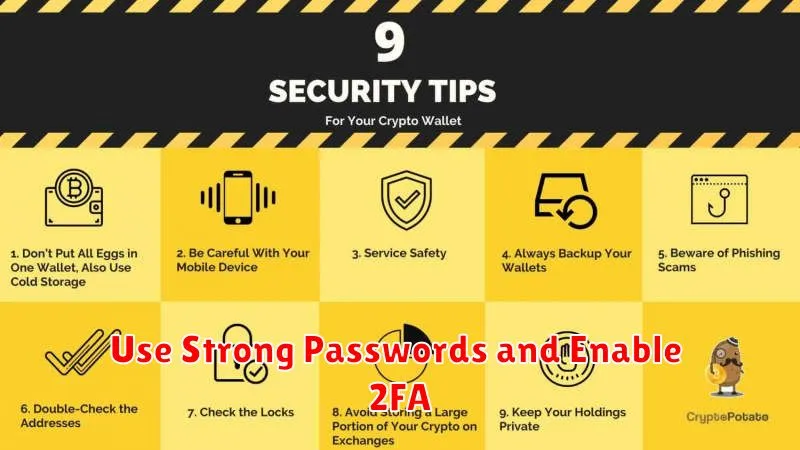
Employing strong passwords is paramount in bolstering online security. A robust password incorporates a combination of uppercase and lowercase letters, numbers, and symbols, ideally exceeding 12 characters in length. Avoid using easily guessable information such as birthdays, pet names, or common words. Consider using a password manager to generate and securely store complex passwords for various accounts.
Furthermore, activating two-factor authentication (2FA) adds an extra layer of protection. 2FA requires a second form of verification beyond your password, such as a code sent to your phone or email, or a biometric scan. This significantly hinders unauthorized access, even if your password is compromised. Enable 2FA wherever possible, particularly for sensitive accounts like banking and email.
Regularly review and update your passwords. Change passwords periodically, especially for accounts displaying any suspicious activity. Avoid reusing the same password across multiple platforms. A breach in one account could potentially compromise others if you utilize the same credentials.
The combination of strong passwords and 2FA presents a robust defense against unauthorized access. Implementing these measures significantly reduces the risk of data breaches and identity theft, safeguarding your personal information and online security.
Store Your Private Keys Offline
Safeguarding your private keys is paramount in the realm of cryptocurrency. These keys represent complete control over your digital assets, and their compromise could lead to irreversible loss of funds. Therefore, employing robust security measures is absolutely essential.
The most effective method for protecting your private keys is to store them offline. This involves removing the keys from any device connected to the internet, thus significantly reducing the risk of unauthorized access through malware, phishing attacks, or remote hacking attempts. This principle is often referred to as the “air gap” security strategy.
Several options exist for offline storage. Hardware wallets, specifically designed for securely storing cryptographic keys, offer a high degree of protection. These devices often incorporate advanced security features like tamper-evident seals and PIN protection. Alternatively, you can write your private keys down on paper, using a method like a BIP39 seed phrase, and store them in a physically secure location, such as a fireproof safe. However, this method requires meticulous care and carries inherent risks.
Regardless of your chosen method, maintaining absolute secrecy is critical. Never share your private keys with anyone, under any circumstances. Remember, anyone with access to your private keys has complete control over your cryptocurrency holdings. Be wary of phishing scams and other deceptive practices that aim to acquire your private keys.
In conclusion, prioritizing offline storage for your private keys is a non-negotiable aspect of responsible cryptocurrency ownership. While various methods exist, the core principle remains the same: eliminate the possibility of online compromise to safeguard your digital assets.
Avoid Suspicious Links and Emails
In today’s digital landscape, it is crucial to exercise caution when dealing with unfamiliar links and emails. Many cyber threats originate from malicious actors using deceptive tactics to gain access to sensitive information. Therefore, a vigilant approach is essential for safeguarding personal data and maintaining online security.
Suspicious links often appear in unsolicited emails or messages, promising enticing rewards or containing alarming warnings. These links may lead to websites designed to steal personal information, install malware, or redirect users to fraudulent sites. It’s vital to avoid clicking on any links from unknown sources or those that appear out of context.
Similarly, suspicious emails can be identified through several red flags. These include poor grammar and spelling, generic greetings, urgent requests for personal information, and unexpected attachments. Emails requesting login credentials or financial details should always be treated with extreme caution, as legitimate organizations rarely request such information via email. Always verify the sender’s identity before responding or interacting with the email in any way.
To mitigate risks, it’s recommended to utilize robust antivirus software and spam filters. Regular software updates help to ensure that your system is protected against the latest threats. Furthermore, practicing good online hygiene, including regularly reviewing and updating passwords and being wary of phishing attempts, is crucial for maintaining a secure online environment.
Ultimately, a proactive and cautious approach towards suspicious links and emails is paramount in preventing cyberattacks and protecting sensitive information. By carefully scrutinizing all incoming communications and adhering to robust security practices, you can significantly reduce the risk of becoming a victim of online fraud.
Regularly Update Your Wallet and Software
Maintaining the security of your digital assets requires diligent attention to software updates. Regularly updating your cryptocurrency wallet and all associated software applications is paramount. These updates often include critical security patches that address vulnerabilities exploited by malicious actors.
Outdated software presents a significant risk. Hackers constantly seek weaknesses in older versions to gain unauthorized access to your funds. By neglecting updates, you expose yourself to a heightened risk of theft or loss of your digital assets.
The frequency of updates varies depending on the software provider, but generally, you should install updates as soon as they become available. Check for updates regularly, ideally daily or at least weekly, to ensure you benefit from the latest security enhancements and bug fixes.
Before installing any update, it is advisable to back up your wallet. This precautionary measure safeguards your data in case of unforeseen issues during the update process. Always download updates from the official source to prevent the installation of malware disguised as legitimate updates.
In addition to wallet updates, ensure all operating systems and antivirus software on your devices are up-to-date. A comprehensive approach to security strengthens your overall digital asset protection strategy.
Remember, proactive maintenance is essential for safeguarding your investments. Ignoring software updates significantly increases the likelihood of a security breach, potentially resulting in irreversible financial losses.
Verify Exchange URLs Before Logging In
Before you log in to any Exchange server, it’s crucial to verify the URL you’re using. This simple step can prevent you from falling victim to phishing attacks and malware.
Phishing attacks often involve fake websites that mimic legitimate Exchange login pages. These fake sites are designed to steal your credentials, giving attackers access to your sensitive data and potentially your entire organization’s network.
To verify a URL, carefully examine the address in your browser’s address bar. Look for any inconsistencies, such as misspelled words, unusual characters, or suspicious domains. Legitimate Exchange URLs will typically follow a consistent and predictable format, often including your company’s domain name.
Double-check the HTTPS protocol (the “https://” at the beginning of the URL). This ensures that your connection is encrypted, protecting your data from eavesdropping. The presence of a padlock icon in your browser’s address bar usually indicates a secure connection.
If you’re unsure about the authenticity of a URL, contact your IT department or system administrator for confirmation. It’s always better to err on the side of caution and confirm the legitimacy of the website before entering any sensitive information.
By taking these simple precautions, you can significantly reduce your risk of becoming a victim of a phishing attack and protect your data and your organization’s security.
