
The cryptocurrency landscape is in constant flux, and 2025 promises significant shifts in global regulations. This article explores five key ways in which crypto regulations are evolving, impacting everything from stablecoin oversight to decentralized finance (DeFi) frameworks. Understanding these changes is crucial for navigating the increasingly complex world of digital assets and ensuring compliance for both investors and businesses operating within the crypto ecosystem.
New Tax Policies on Crypto Gains

The recent surge in cryptocurrency adoption has prompted governments worldwide to address the tax implications of digital asset transactions. New tax policies are emerging, aiming to clarify the tax treatment of cryptocurrency gains and losses, bringing them in line with traditional asset classes like stocks and bonds. These policies vary considerably across jurisdictions, highlighting the complexities and challenges involved in regulating this rapidly evolving market.
One significant area of focus is the classification of cryptocurrency for tax purposes. Some jurisdictions treat it as property, subjecting gains to capital gains taxes, while others classify it as a currency, leading to different tax treatments depending on its use. This lack of consistent classification adds to the uncertainty faced by both taxpayers and businesses operating within the cryptocurrency ecosystem.
Reporting requirements are also a key aspect of these new policies. Many governments are implementing stricter rules around the reporting of cryptocurrency transactions, requiring individuals and businesses to disclose details of their holdings, trades, and associated gains or losses. This increased transparency aims to improve tax compliance and prevent tax evasion within the crypto space.
The tax rates applied to cryptocurrency gains vary widely. Some countries align them with existing capital gains tax rates, while others impose higher rates, reflecting a perceived risk or volatility associated with the asset class. This disparity highlights the ongoing debate about the appropriate tax treatment for digital assets, with differing viewpoints on whether they should be treated more favorably or less favorably than traditional investments.
Despite the growing clarity provided by these new policies, challenges remain. The decentralized and borderless nature of cryptocurrencies creates difficulties in enforcement and tax collection. Moreover, the constant evolution of the cryptocurrency landscape, including the emergence of new technologies like NFTs and DeFi, presents ongoing complexities for tax authorities in adapting their regulations.
In conclusion, the evolving landscape of cryptocurrency taxation necessitates continuous vigilance and adaptation. Staying informed about the latest tax policies and seeking professional advice is crucial for individuals and businesses involved in cryptocurrency transactions to ensure compliance and minimize potential tax liabilities.
Stricter KYC and AML Requirements
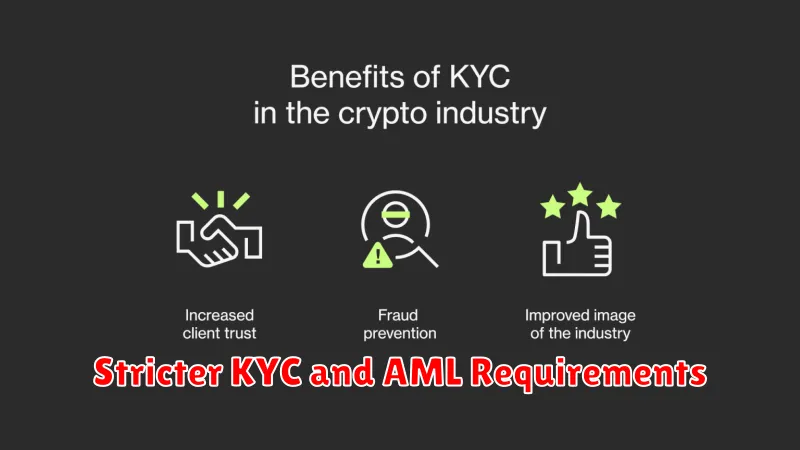
The financial industry is facing increasing pressure to strengthen its Know Your Customer (KYC) and Anti-Money Laundering (AML) compliance programs. This intensification stems from a growing awareness of the risks associated with financial crime, including terrorist financing and money laundering, coupled with heightened regulatory scrutiny.
Regulations are becoming more stringent globally. Authorities are demanding more robust due diligence processes, improved data management, and enhanced monitoring capabilities. This translates into increased costs for financial institutions, but also a greater responsibility to safeguard the integrity of the financial system.
Technological advancements are playing a crucial role in meeting these stricter requirements. Artificial intelligence (AI) and machine learning (ML) are being leveraged to automate aspects of KYC/AML compliance, such as identity verification and transaction monitoring. These technologies enable faster processing, improved accuracy, and more efficient detection of suspicious activity.
However, implementing effective KYC/AML programs requires more than just technology. Robust internal controls, comprehensive training for staff, and a culture of compliance are equally vital. Organizations must establish clear procedures, conduct regular audits, and maintain accurate records to demonstrate their commitment to compliance.
Failure to comply with KYC/AML regulations can result in significant penalties, including hefty fines, reputational damage, and even legal action. Therefore, financial institutions must prioritize the implementation and ongoing enhancement of their KYC/AML programs to mitigate risk and maintain their operational integrity.
The ongoing evolution of KYC/AML regulations necessitates a proactive approach. Financial institutions must stay abreast of the latest developments, adapt their procedures accordingly, and continually assess the effectiveness of their compliance programs. This continuous improvement is essential for maintaining a strong and resilient defense against financial crime.
Global Efforts to Regulate Stablecoins
The rapid growth of stablecoins has presented significant challenges for global regulators. These cryptocurrencies, designed to maintain a stable value pegged to a fiat currency like the US dollar, have become increasingly integrated into the broader financial system, raising concerns about financial stability, consumer protection, and money laundering.
Many jurisdictions are grappling with how to effectively regulate stablecoins without stifling innovation. A key challenge lies in the decentralized nature of many stablecoins, making it difficult to apply traditional regulatory frameworks. This necessitates international cooperation to establish a common understanding of the risks and develop consistent regulatory approaches.
Regulatory frameworks under consideration include licensing requirements for stablecoin issuers, robust reserve requirements to ensure adequate backing, and stringent anti-money laundering (AML) and know-your-customer (KYC) measures. The level of scrutiny applied often depends on the specific design and characteristics of the stablecoin, with algorithmic stablecoins facing particularly intense scrutiny due to their inherent volatility risks.
International organizations, such as the Financial Stability Board (FSB) and the G7, are playing a crucial role in coordinating global efforts. They are working towards developing consistent standards and best practices to mitigate systemic risks associated with stablecoins. This collaborative approach is essential given the cross-border nature of cryptocurrencies and the potential for regulatory arbitrage.
The debate surrounding stablecoin regulation is ongoing, with a balance needed between promoting innovation and protecting the financial system. The ultimate goal is to create a regulatory environment that fosters responsible innovation while safeguarding consumers and maintaining financial stability. Finding this balance is crucial for the future of both the cryptocurrency market and the global financial system.
Increased Scrutiny on DeFi Platforms

The decentralized finance (DeFi) sector is facing increased scrutiny from regulators globally. This heightened attention stems from several factors, including concerns about consumer protection, market manipulation, and the potential for money laundering and other illicit activities.
Regulatory bodies are grappling with the unique challenges posed by the decentralized and borderless nature of DeFi. Traditional regulatory frameworks, designed for centralized financial institutions, often struggle to effectively address the complexities of decentralized protocols and anonymous transactions.
One major area of concern is the lack of consumer protection within the DeFi ecosystem. The absence of centralized oversight means that users often lack the same level of safeguards afforded to customers of traditional financial services. This vulnerability increases the risk of fraud, hacks, and significant financial losses.
Furthermore, the anonymity offered by some DeFi platforms raises concerns about their potential use in facilitating illegal activities, such as money laundering and tax evasion. Regulators are exploring ways to enhance transparency and traceability within the DeFi space while respecting the principles of decentralization.
The increasing volatility of the cryptocurrency markets, which are intrinsically linked to DeFi, further complicates the regulatory landscape. The inherent risks associated with crypto assets necessitate a cautious and comprehensive approach to regulation.
As the DeFi sector continues to evolve and mature, it is crucial for regulators to develop effective and proportionate regulatory frameworks that balance innovation with the need for consumer protection and the prevention of financial crime. Finding this equilibrium will be a key challenge in shaping the future of DeFi.
Banning of Privacy Coins in Some Regions

Several regions have implemented bans or restrictions on the use of privacy coins, citing concerns about their potential for use in illicit activities such as money laundering, tax evasion, and financing terrorism. These coins, designed to enhance user anonymity, make it difficult to trace transactions, raising red flags for regulatory bodies.
The arguments for banning privacy coins often center around the need to maintain financial transparency and prevent criminal activity. Proponents of bans argue that the benefits of enhanced privacy are outweighed by the risks associated with the potential for misuse. They emphasize the importance of robust anti-money laundering (AML) and know your customer (KYC) regulations to ensure the integrity of the financial system.
Conversely, arguments against banning privacy coins highlight the importance of financial privacy and the potential for censorship. Critics argue that such bans disproportionately affect law-abiding individuals who value their financial privacy, and that legitimate uses of privacy coins, such as protecting whistleblowers or individuals in repressive regimes, should be considered. They suggest that focusing on enhanced monitoring and investigation techniques, rather than outright bans, would be a more effective approach.
The legal and practical challenges associated with enforcing bans on privacy coins are significant. The decentralized and global nature of cryptocurrencies makes it difficult to effectively prevent their use, even within specific jurisdictions. Furthermore, the potential for individuals to utilize mixing services or other anonymization tools to obscure the origins of funds further complicates enforcement efforts.
The debate surrounding the banning of privacy coins remains complex and multifaceted. Balancing the need for financial transparency with the protection of individual privacy presents a significant challenge for regulators globally. The effectiveness and long-term implications of bans remain to be seen, and alternative approaches to mitigating the risks associated with privacy coins are actively being explored.
