
The decentralized, secure nature of blockchain technology is revolutionizing numerous sectors. This article explores five industries significantly impacted by blockchain’s transformative potential: supply chain management, finance, healthcare, digital identity, and voting systems. Discover how blockchain solutions are enhancing transparency, security, and efficiency across these diverse fields, leading to improved processes and increased trust.
Finance: Decentralized Payments and Banking
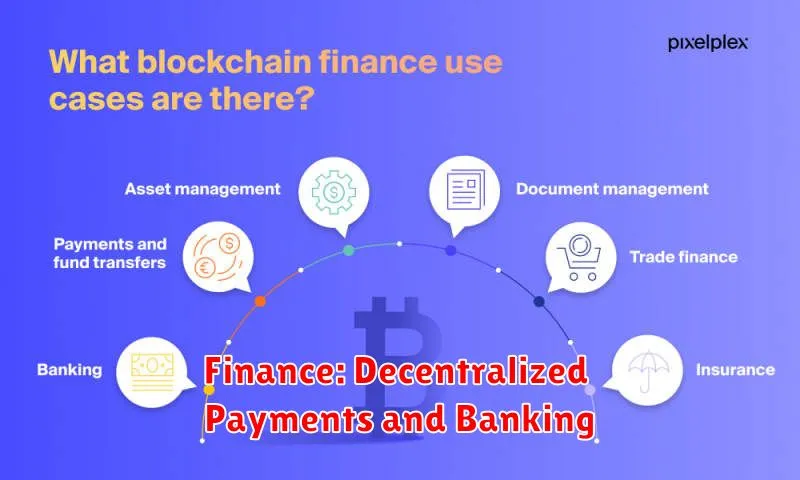
The landscape of finance is undergoing a significant transformation driven by the rise of decentralized payment systems and banking. This shift away from traditional, centralized institutions promises several key advantages, including increased transparency, enhanced security, and greater financial inclusion.
Decentralized finance (DeFi) leverages blockchain technology to create systems where transactions are recorded on a distributed ledger, eliminating the need for intermediaries like banks or payment processors. This inherently reduces costs and speeds up transactions. Furthermore, the immutable nature of blockchain enhances security, minimizing the risk of fraud and data breaches.
One of the most compelling aspects of DeFi is its potential to promote financial inclusion. Traditional banking systems often exclude individuals in underserved communities due to high costs, stringent requirements, or geographical limitations. DeFi protocols, however, can provide access to financial services to a wider population, regardless of their location or credit history.
However, the decentralized finance ecosystem is not without its challenges. Scalability remains a significant concern, as many blockchain networks struggle to handle high transaction volumes. Regulation is another crucial factor, as the lack of clear regulatory frameworks poses risks to both users and the wider financial system. Security vulnerabilities, while mitigated by the decentralized nature, still exist and need constant vigilance.
Despite these challenges, the potential benefits of decentralized payments and banking are substantial. Ongoing developments in blockchain technology and the increasing adoption of DeFi protocols suggest that this sector will continue to evolve and reshape the future of finance. Further research and development, coupled with clear regulatory guidelines, are crucial to harnessing the full potential of this innovative approach to financial systems.
Healthcare: Secure Medical Records
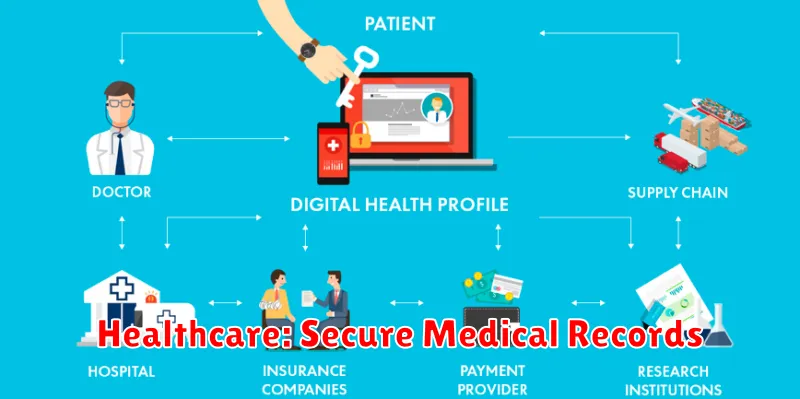
Maintaining the security of medical records is paramount in today’s healthcare landscape. The sensitive nature of patient information necessitates robust security measures to protect against unauthorized access, use, disclosure, disruption, modification, or destruction.
Compliance with regulations such as HIPAA in the United States and GDPR in Europe is crucial. These regulations outline strict guidelines for the handling and storage of protected health information (PHI). Failure to comply can result in significant legal and financial penalties.
Technological advancements play a vital role in enhancing security. Encryption, firewalls, intrusion detection systems, and access control mechanisms are essential components of a comprehensive security strategy. Regular security audits and vulnerability assessments are necessary to identify and address potential weaknesses.
Employee training is another critical aspect. Healthcare professionals must be adequately trained on security protocols and best practices to minimize the risk of human error. This includes proper password management, awareness of phishing scams, and understanding of data breach procedures.
The implementation of a multi-layered security approach, incorporating both technological and procedural safeguards, is essential to effectively protect patient data. This requires a commitment from all stakeholders, including healthcare providers, technology vendors, and regulatory bodies.
Furthermore, the continuous evolution of security threats necessitates ongoing vigilance and adaptation. Staying abreast of emerging threats and implementing appropriate countermeasures is crucial for maintaining the integrity and confidentiality of medical records.
In conclusion, ensuring the security of medical records requires a multifaceted approach encompassing technological solutions, regulatory compliance, employee training, and a continuous commitment to adapting to evolving threats. The ultimate goal is to protect patient privacy and maintain public trust in the healthcare system.
Logistics: Transparent Supply Chains
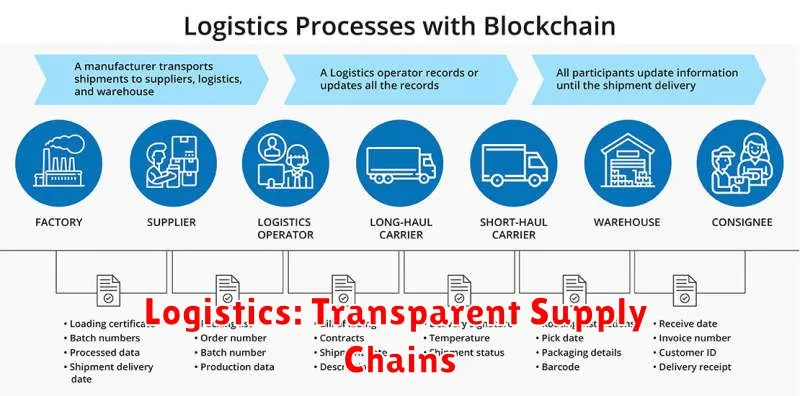
Logistics plays a crucial role in modern business, impacting everything from production efficiency to customer satisfaction. A key area of focus within the field is the development and implementation of transparent supply chains.
Transparency in supply chains refers to the ability to track and trace goods throughout their journey, from origin to final destination. This involves access to detailed information about each stage of the process, including sourcing, manufacturing, transportation, and distribution. This level of visibility allows businesses to better manage risks, improve efficiency, and enhance their overall reputation.
Several technologies contribute to achieving greater supply chain transparency. Blockchain technology, for example, offers a secure and immutable record of transactions, providing verifiable data on the movement and provenance of goods. RFID (Radio-Frequency Identification) tags enable real-time tracking of individual items, offering granular visibility into their location and status. Data analytics, applied to the collected data, reveals patterns and trends that can be used for predictive modeling and proactive management of potential disruptions.
The benefits of a transparent supply chain are substantial. Improved visibility allows for better inventory management, reducing waste and minimizing stockouts. Enhanced traceability enables quick identification and mitigation of potential problems, such as product recalls or counterfeiting. Increased accountability fosters trust with customers and stakeholders, building stronger relationships and boosting brand reputation. Furthermore, improved efficiency can translate to significant cost savings for businesses.
Despite the advantages, implementing a transparent supply chain requires significant investment in technology and infrastructure. Businesses must also address challenges related to data security and privacy. However, the long-term benefits of improved efficiency, risk mitigation, and enhanced reputation often outweigh the initial costs and complexities.
In conclusion, the pursuit of transparent supply chains is a vital strategic imperative for businesses of all sizes. By leveraging technology and embracing best practices, companies can achieve greater visibility, efficiency, and accountability throughout their supply chains, creating a more resilient and sustainable business model. The result is a competitive advantage in today’s dynamic and demanding global marketplace.
Real Estate: Tokenized Property Ownership
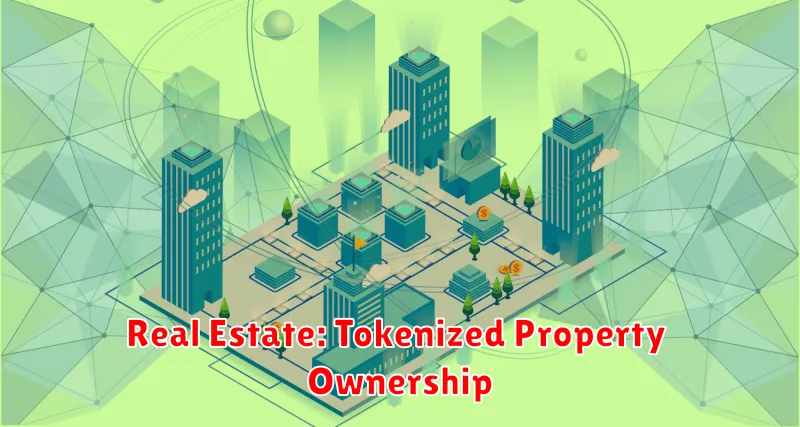
The real estate industry is undergoing a significant transformation with the emergence of tokenized property ownership. This innovative approach leverages blockchain technology to fractionalize and tokenize real estate assets, offering unprecedented levels of liquidity and accessibility to investors.
Tokenization allows for the division of ownership in a property into smaller, tradable units represented by digital tokens. These tokens can be bought and sold on various platforms, significantly increasing liquidity compared to traditional real estate transactions, which often involve lengthy processes and substantial transaction costs.
One of the key benefits is enhanced accessibility. Previously, investing in high-value real estate required substantial capital, excluding many potential investors. Tokenization democratizes access, enabling smaller investors to participate in a traditionally exclusive market.
Furthermore, increased transparency is a significant advantage. The immutability of blockchain technology ensures a clear and auditable record of ownership, reducing the risk of fraud and disputes. All transactions are recorded on the blockchain, providing a transparent and verifiable history of the asset.
However, it’s crucial to acknowledge the challenges associated with tokenized property ownership. Regulatory uncertainty remains a significant hurdle, as the legal frameworks governing this emerging asset class are still developing. Furthermore, the technology itself is relatively new, and potential scalability and security issues need to be addressed.
Despite these challenges, the potential benefits of tokenized property ownership are substantial. It promises to revolutionize the real estate industry by improving liquidity, accessibility, transparency, and efficiency. As regulatory frameworks evolve and the technology matures, tokenized real estate is poised to become a significant force in the global market.
Entertainment: NFT-Based Content Monetization
The entertainment industry is undergoing a significant transformation, driven by the rise of NFTs (Non-Fungible Tokens) and their potential for content monetization. This innovative technology offers creators and consumers new ways to interact with and value digital assets, leading to exciting possibilities for the future of entertainment.
NFTs provide a unique solution to the long-standing challenge of digital ownership and scarcity. Unlike easily duplicated digital content, NFTs represent unique ownership rights, verifiable on a blockchain. This allows creators to sell their work directly to fans, retaining greater control over their intellectual property and receiving a larger share of the revenue.
The impact on various entertainment sectors is already evident. Music artists are releasing exclusive tracks and album art as NFTs, offering fans unique digital collectibles and access to VIP experiences. Filmmakers are exploring NFT-based distribution models, providing fans with ownership of digital versions of films and behind-the-scenes content.
Gamers are particularly benefiting from NFT integration. In-game items, characters, and even virtual land can be tokenized as NFTs, creating valuable assets that can be traded on secondary markets. This enhances player engagement and offers a new level of ownership within the game ecosystem.
However, the widespread adoption of NFT-based monetization is not without challenges. The volatility of the cryptocurrency market can impact the value of NFTs. Furthermore, educating consumers about the technology and its benefits is crucial for its successful integration within the entertainment industry.
Despite these challenges, the potential for NFTs to revolutionize content monetization in entertainment is undeniable. By empowering creators and fostering new relationships between artists and their fans, NFTs are shaping a more equitable and dynamic entertainment landscape.
The future of entertainment will likely see a greater integration of blockchain technology and NFTs, leading to novel content distribution models, enhanced fan engagement, and potentially higher revenue streams for creators. This evolving ecosystem promises a fascinating shift in how content is created, valued, and experienced.
