
Navigating the volatile world of cryptocurrency trading can be daunting, especially for beginners. Many new traders fall prey to common pitfalls that can lead to significant losses. This article highlights five beginner mistakes to avoid, equipping you with the knowledge to make informed decisions and improve your chances of successful crypto trading. Learn how to avoid costly errors related to risk management, market analysis, and emotional trading, and set yourself up for a more profitable journey in the exciting yet unpredictable landscape of digital assets.
Investing Without Research

Investing without adequate research is akin to navigating a vast ocean without a map or compass. It’s a risky endeavor with a significantly increased probability of encountering unforeseen challenges and ultimately, financial loss.
Due diligence is paramount in the investment world. Thorough research allows investors to understand the inherent risks associated with any given investment, enabling informed decision-making. Without this crucial step, investors are essentially gambling, relying solely on luck or speculation.
Understanding a company’s financial statements, management team, competitive landscape, and industry trends are all vital components of effective research. This knowledge empowers investors to evaluate the investment’s potential for growth and profitability, as well as its vulnerability to various market factors.
While some investors may advocate for alternative strategies, relying on tips, rumors, or market sentiment without fundamental analysis greatly increases the likelihood of poor investment choices. A disciplined approach to research minimizes this risk and maximizes the potential for long-term success.
Ultimately, investing without research significantly hampers an investor’s ability to make sound judgments. It exposes them to unnecessary risks and diminishes their chances of achieving their financial goals. The time and effort dedicated to thorough research are an invaluable investment in themselves.
In conclusion, responsible investing demands a commitment to comprehensive research. Neglecting this crucial step undermines the entire process and significantly jeopardizes the investor’s capital and long-term financial well-being.
Ignoring Stop Loss and Risk Management

Ignoring stop loss orders and proper risk management is a significant mistake for any trader, regardless of experience level or market conditions. It exposes the trader to potentially unlimited losses, significantly increasing the chance of substantial financial setbacks.
Risk management is not merely a suggestion; it’s a fundamental pillar of successful trading. It involves a comprehensive strategy to define acceptable loss levels and to protect capital through pre-determined exit points. Failing to implement a robust risk management plan demonstrates a lack of understanding of market volatility and the inherent risks involved in trading.
A stop-loss order serves as a crucial safety net, automatically selling an asset when it reaches a predetermined price. This limits potential losses and protects against significant market downturns. By neglecting to use stop-loss orders, traders effectively gamble their entire capital on the success of every single trade, exposing themselves to potentially catastrophic outcomes.
The consequences of ignoring these vital aspects of trading can be severe. These can range from substantial financial losses eroding trading capital, to the psychological impact of witnessing large losses, potentially leading to impulsive decision-making and further losses. The emotional toll can be substantial, undermining the trader’s confidence and impacting their overall trading performance.
Therefore, adopting a disciplined approach to risk management, including the consistent use of stop-loss orders, is not optional, but rather essential for long-term success and survival in any financial market. Ignoring these fundamental principles is a recipe for disaster.
Falling for Pump-and-Dump Schemes
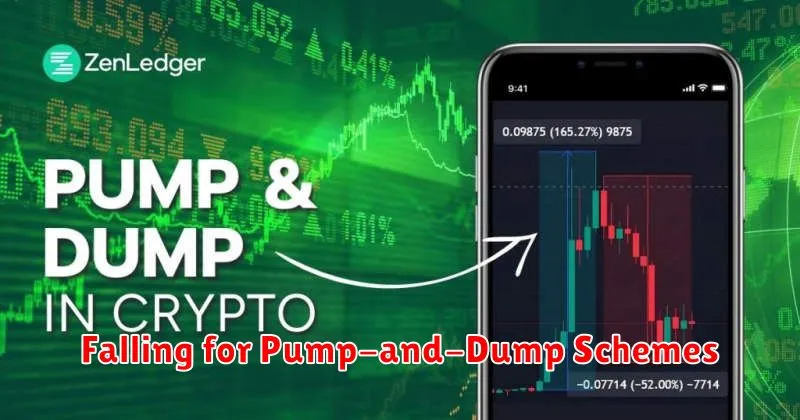
Pump-and-dump schemes are a type of securities fraud that artificially inflates the price of a stock or other security through deceptive and manipulative tactics. Perpetrators, often using social media and online forums, spread false or misleading information to generate unwarranted buying interest.
The initial phase, the “pump,” involves creating a false sense of excitement and demand. This is achieved through coordinated efforts to hype the asset, sometimes using fabricated news or exaggerated claims about its potential. Unsuspecting investors, lured by the apparent surge in interest and price, rush to buy, further driving up the price.
Once the price reaches a peak, the perpetrators initiate the “dump” phase. They then sell their previously accumulated shares at the inflated price, realizing significant profits. This massive selloff causes the price to plummet, leaving those who bought in later with substantial losses. The perpetrators often disappear, leaving victims with worthless investments.
Identifying pump-and-dump schemes can be challenging, but several red flags should raise suspicion. These include unusually high trading volume with little to no legitimate news driving it, sudden and dramatic price increases, and anonymous or pseudonymous promoters making outlandish claims on social media platforms. Furthermore, a lack of fundamental information about the company or asset is often indicative of fraudulent activity.
Protecting yourself from these schemes requires due diligence. Thoroughly research any investment opportunity before investing, focusing on the company’s financials, management team, and market position. Be wary of unsolicited investment advice, particularly from anonymous sources or those pushing quick riches. Never invest more than you can afford to lose, and always diversify your portfolio.
If you suspect you have been a victim of a pump-and-dump scheme, report it to the appropriate regulatory authorities immediately. Gathering evidence, including communication records and transaction details, can significantly aid in the investigation and potential recovery of losses.
Overtrading and Emotional Decisions
Overtrading, characterized by excessively frequent trading, is a significant pitfall for many investors, often fueled by emotional decisions rather than sound financial strategies. This impulsive behavior can lead to substantial losses and erode investment capital rapidly.
One primary driver of overtrading is the allure of quick profits. The desire for immediate returns can override rational assessment of risk, prompting investors to make hasty trades based on short-term market fluctuations rather than long-term investment goals. This short-sightedness often results in missed opportunities and significant financial setbacks.
Fear and greed are powerful emotional forces that significantly contribute to overtrading. Fear of missing out (FOMO) can compel investors to enter trades even when market conditions are unfavorable, while excessive greed can lead to holding onto losing positions for too long, hoping for a turnaround that may never materialize. These emotions often cloud judgment and prevent objective evaluation of market trends.
The impact of overtrading extends beyond financial losses. The constant stress associated with frequent trading can take a toll on mental well-being. The emotional roller coaster of gains and losses can lead to anxiety, frustration, and even depression. Maintaining a healthy emotional detachment from market fluctuations is crucial for successful long-term investing.
To mitigate the risks of overtrading, investors should cultivate a disciplined approach to investing. This includes developing a well-defined investment strategy, setting realistic profit targets and stop-loss orders, and maintaining detailed records of trades. Furthermore, seeking guidance from a qualified financial advisor can provide valuable support and help investors make informed decisions based on rational analysis rather than emotional impulses.
Ultimately, successful investing requires a delicate balance between ambition and prudence. While striving for profitability is essential, it’s equally crucial to prioritize risk management and emotional control. By understanding the detrimental effects of overtrading and cultivating a disciplined approach, investors can significantly enhance their chances of achieving long-term financial success.
Not Diversifying Your Portfolio

One of the biggest mistakes investors make is not diversifying their portfolio. This means putting all or most of your investment eggs into one basket, which can be incredibly risky.
Diversification is the practice of spreading your investments across different asset classes (like stocks, bonds, real estate, etc.) and sectors (like technology, healthcare, energy, etc.). This helps to reduce risk because if one investment performs poorly, others may still perform well, cushioning the overall impact.
Failing to diversify can lead to significant losses if the chosen investment underperforms. Imagine investing heavily in a single company’s stock; if that company encounters financial trouble, your entire investment could be wiped out. A diversified portfolio is much more resilient to such shocks.
The level of diversification needed depends on individual circumstances, risk tolerance, and investment goals. However, even a relatively small amount of diversification can significantly reduce risk.
It’s crucial to remember that diversification doesn’t eliminate risk entirely; it simply mitigates it. A well-diversified portfolio is still subject to market fluctuations, but the impact is likely to be less severe than with a concentrated portfolio.
Before making any investment decisions, it’s always a good idea to consult with a financial advisor who can help you create a diversified portfolio that aligns with your specific needs and risk tolerance.
